Now accepting applications in Raleigh / Durham / Chapel Hill / Cary / Morrisville

Your home might be making you sick. We help you find out.

A 4-week home health assessment using commercial-grade air quality monitoring, expert interpretation, and a personalized action plan.

See if it's the right fit
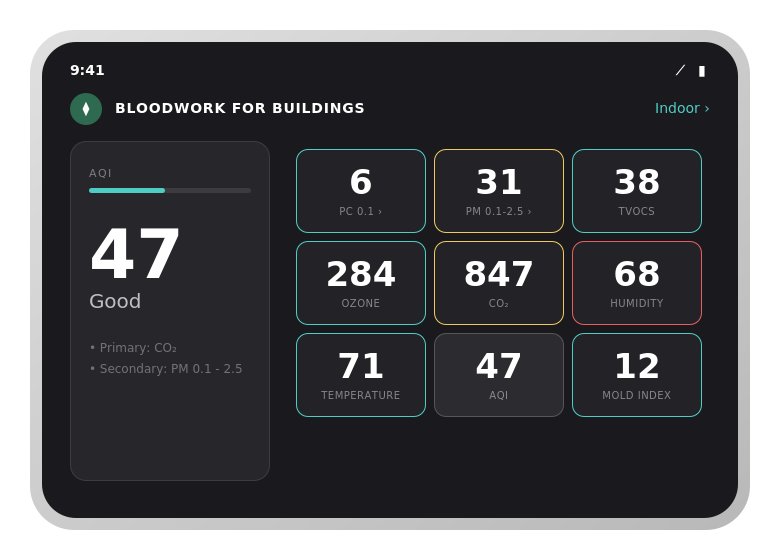
Commercial-grade indoor air quality monitor showing AQI, particulate matter, VOCs, ozone, CO2, humidity, temperature, and mold index readings

Three steps to understanding your home

1

We place the sensor

A commercial-grade air quality monitor (over $3,000 worth of equipment) is placed in your home — no installation, no holes, no wiring. During the 4 weeks we move it between rooms, including your bedroom at night, to build a complete picture.

2

We monitor for 4 weeks

The sensor continuously tracks particulate matter, VOCs, CO2, ozone, NO2, humidity, temperature, and mold risk indicators — 24/7. We check in throughout and flag anything urgent immediately.

3

You get a clear action plan

Your data is reviewed by two teams: a sensor analytics team that identifies patterns in your readings, and a home health expert with 20+ years of field experience who interprets what those patterns mean for your home. You receive a personalized report with specific, prioritized recommendations — not just numbers, but what to do and in what order.

Data without interpretation is just noise

Most air quality services hand you a report full of numbers and leave you to figure it out. We do the opposite. Every home gets reviewed twice: first by a sensor analytics team that identifies patterns and anomalies in your data, then by a field expert who has spent 20+ years diagnosing sick homes and knows what those patterns actually mean for you and your family.

Your action plan isn't generic. It's specific to your home, your situation, and your budget — with recommendations ordered by what will make the biggest difference first.

Example recommendations

💧

Humidity control

"Your bedroom humidity is spiking to 68% overnight. A $40 dehumidifier in the bedroom will make an immediate difference in how you feel waking up."

🔧

HVAC assessment

"Your PM levels spike every time the HVAC kicks on. Your filter is likely undersized — upgrade to MERV 13 and change it every 60 days."

🚪

Source isolation

"Your attic is leaking air into the living space through poorly sealed access doors. Sealing those will significantly reduce your spore count."

🍳

Ventilation

"Your CO and PM spike every evening — that's your gas stove. Use the range hood every time you cook, or open a window. Long-term, consider switching to induction."

This might be the right fit if...

Real homes, real results

★★★★★
"My daughter's allergies had been getting worse for two years. Three doctors, two air purifiers, nothing helped. Within the first week of the assessment, they identified that our HVAC was distributing contaminants from the crawlspace every time it kicked on. One filter upgrade and a duct seal later — she's sleeping through the night for the first time in months."
Sarah M. · Cary, NC
★★★★★
"I'd been tracking my sleep with an Oura Ring and couldn't figure out why my HRV kept dropping. Turns out the humidity in my bedroom was spiking to 70% overnight and the VOCs from a recent renovation were way above safe levels. The action plan was specific — not 'open a window' but exactly what to do, what it would cost, and in what order."
James R. · North Raleigh, NC
★★★★★
"We bought a consumer air quality monitor and it just made us anxious — it would flash red and we had no idea what to do. This was completely different. They explained everything, prioritized what actually mattered, and most of the fixes were things we could do ourselves for under $200. Worth every penny."
Priya K. · Durham, NC

I spent a year going from doctor to doctor. The answer was in the air.

A couple of years ago, my sister and I started experiencing unexplained fatigue, brain fog, and hormonal issues. We saw dozens of doctors. Nobody could figure it out.

Eventually, an integrative medicine doctor suggested we test for mold. Turns out our office was the problem. Once we reduced our exposure, we started feeling like ourselves again.

But the process of figuring that out was one of the most confusing and expensive experiences of my life. The tests gave us numbers nobody could explain. The remediation quotes ranged from "you're fine" to "tear out the walls." Nobody could tell us what the data actually meant or what to do next.

That experience sent me deep into the world of indoor environmental health — working alongside building scientists, researchers, and a home health expert with over 20 years of field experience. What I kept hearing was the same gap: people can get data about their home, but nobody tells them what it actually means or gives them a clear, prioritized plan to fix it.

So that's what we built. A home health assessment that gives you specific answers: what's in your air, which issues matter most, exactly what to do about them, and in what order. Not more confusion — clarity.

What's included — and what it's worth

A professional home environmental assessment typically costs thousands. Here's what you get:

Professional mold and air quality testing (industry average) $1,000–1,500
$3,000+ sensor equipment placed in your home $3,000+
Expert data review by sensor analytics team + 20-year home health specialist $500+
Personalized, prioritized action plan $500+
Check-ins throughout + urgent issue flagging $250+
Total value $5,750+

Home Health Assessment

$999
Full 4-week assessment. Everything above included.
🎥 Get $200 off if you allow us to film the process

Apply now
Currently serving Raleigh / Durham / Chapel Hill / Cary / Morrisville

Frequently asked questions

How long does the assessment take? +
4 weeks from sensor placement to final report. We move the sensor between rooms during that time to capture a full picture of your home's air quality. Most people start seeing actionable insights within the first week.
Do I keep the sensor? +
The sensor is placed in your home for the duration of the assessment and then returned to us. The equipment is valued at over $3,000 — by using it across assessments, we're able to offer this service at a fraction of what it would cost to own the equipment yourself.
What does the sensor actually measure? +
Particulate matter (PM 1.0, 2.5, and 10), volatile organic compounds (VOCs), carbon dioxide (CO2), ozone, nitrogen dioxide (NO2), humidity, temperature, and mold risk indicators. These are the metrics that directly affect your health, sleep, and how you feel day to day.
Is this just for people who think they have mold? +
Not at all. Mold is one piece of the puzzle, but indoor air quality issues go well beyond mold. Elevated VOCs from cleaning products, furniture off-gassing, or paint can cause headaches, fatigue, and respiratory irritation. High particulate matter — from cooking, candles, or a poorly filtered HVAC system — affects your lungs and cardiovascular system over time. CO2 buildup in poorly ventilated bedrooms can disrupt your sleep quality without you ever realizing it. We measure all of these and more. Whether or not you suspect mold, understanding the full picture of what you're breathing is what this assessment is designed to do.
What if the sensor doesn't find anything wrong? +
That's a great outcome — and it's still valuable. Knowing your air quality is healthy gives you a baseline and peace of mind. We'll also share any small optimizations we spot, because even homes with good air quality can often be improved with minor changes.
What does the $200 filming discount involve? +
We're documenting the assessment process to create educational content that helps more people understand indoor air quality. If you opt in, we'll film portions of the process — the sensor placement, data walkthrough, and any interesting findings. You'll be on camera and we'll discuss the details with you beforehand.
Who reviews my data? +
Two teams. First, a dedicated sensor analytics team reviews your data for patterns and anomalies — they work with this equipment across hundreds of deployments and know exactly what to look for. Then, a home health expert with over 20 years of field experience interprets those findings in the context of your specific home. It's the combination of data science and field experience that makes the action plan accurate.

See if it's the right fit

Tell us a bit about your home and we'll be in touch within 24 hours.

We'll respond within 24 hours. No obligation, no pressure.